Introduction: What Is TikTok Organic Growth?
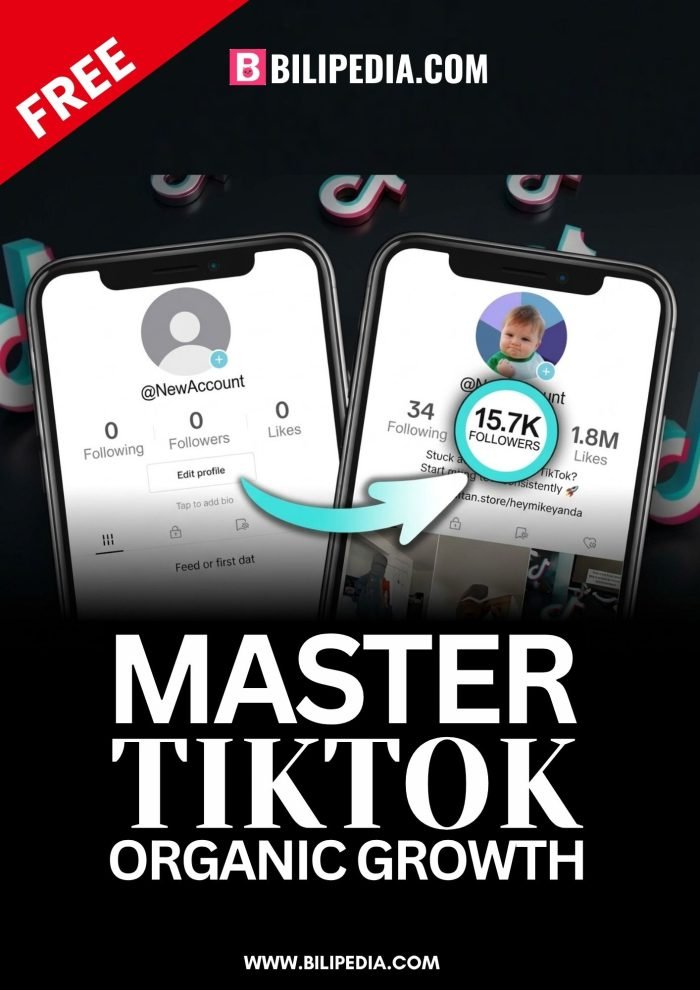
TikTok organic growth is the process of increasing your reach, views, followers, engagement, and business opportunities without paying for advertisements. It involves creating valuable short-form videos, understanding your audience, improving your content strategy, and learning from performance data.
The goal is not simply to go viral. The real goal is to build an audience that consistently watches your content, trusts your recommendations, engages with your videos, and eventually takes action.
Whether you are a beginner, content creator, freelancer, coach, influencer, or business owner, mastering organic growth requires a combination of creativity, strategy, consistency, and experimentation.
This guide covers the complete process, from setting up your account to developing content, increasing discoverability, analyzing results, and monetizing your audience.
Page 1: Understanding How TikTok Organic Growth Works
1.1 How the TikTok recommendation system works
TikTok recommends videos to users based on signals that help predict what they may find interesting. The exact system is not fully public, and its behavior can change over time.
Important recommendation signals include:
- Viewer interactions: Whether people watch, like, comment on, share, save, or skip your videos.
- Watch behavior: How long people watch, whether they finish the video, and whether they rewatch it.
- Video information: Captions, on-screen text, sounds, hashtags, and the subject of your content.
- User preferences: The topics, creators, and types of videos a viewer has previously interacted with.
- Content eligibility: Whether the video meets TikTok's rules and qualifies for recommendation.
Not every signal has the same importance in every situation. A video with many likes can still perform poorly if viewers leave quickly, while a useful video with fewer likes may continue attracting viewers through search.
The practical lesson is simple: make content that the right people want to watch, understand, and share.
1.2 The four pillars of organic growth
1. Audience clarity
Know exactly whom you are creating content for, what they want, and which problems they need solved.
2. Content quality
Deliver a strong opening, one clear idea, useful information, and a satisfying conclusion.
3. Discoverability
Help TikTok and potential viewers understand your topic through relevant keywords, captions, on-screen text, and appropriate hashtags.
4. Continuous improvement
Study your analytics, identify what works, test new approaches, and repeat successful formats without making every video identical.
1.3 Why some accounts grow while others remain stuck
Many creators publish videos without a clear audience, change topics constantly, use weak openings, or copy popular trends without adapting them to their niche.
These habits make it harder to build a recognizable identity and learn which content attracts the right viewers.
For example, an account that alternates randomly between cooking, gaming, fitness, and business advice may struggle to build a consistent audience. An account focused on practical fitness advice for beginners gives viewers a clearer reason to follow.
This does not mean you can never experiment with different subjects. It means your experiments should generally serve the same audience or fit within a recognizable content identity.
Key principle: Do not focus only on gaining attention. Build a repeatable system for earning attention from the people you want to reach.
Page 2: Build a Strong Profile and Choose Your Niche
2.1 Choose a niche with growth potential
Your niche is the specific subject or audience your content serves. A strong niche makes your account easier to understand and helps you generate ideas consistently.
Examples of broad niches and more focused alternatives:
| Broad niche | More focused niche |
| Fitness | Home workouts for beginners |
| Business | Online business tips for freelancers |
| Beauty | Affordable skincare and makeup tutorials |
| Education | English speaking practice for beginners |
| Technology | AI tools for students and small businesses |
| Food | Quick meals for busy people |
| Personal finance | Budgeting tips for young professionals |
| Travel | Affordable travel guides for local destinations |
A useful niche sits at the intersection of three things:
- Audience demand: People actively care about the subject.
- Your ability to deliver: You have knowledge, experience, curiosity, or a reliable way to research it.
- Repeatable content: You can create dozens of useful videos without exhausting your ideas.
You do not need to select a niche forever. Begin with a focused direction, publish content, and refine it as you learn what your audience responds to.
2.2 Define your target audience
Instead of saying, “My audience is everyone who uses TikTok,” define a more specific person.
For example:
“My audience is beginner freelancers who want to find clients, improve their skills, and earn income online.”
Then identify:
- What problems do they face?
- What questions do they frequently ask?
- What mistakes do they make?
- What results are they trying to achieve?
- What misconceptions prevent them from progressing?
- What type of content would make them follow your account?
The more clearly you understand these questions, the easier it becomes to create relevant content.
2.3 Optimize your TikTok profile
Your profile should answer three questions quickly: Who are you? What value do you provide? Why should someone follow you?
Your Name | Your Topic
Clear, recognizable username and profile image
Helping [specific audience] achieve [specific result].
Practical tips, tutorials, and strategies.
Example for a digital marketing account
Username: @GrowthWithYou
Bio: Helping small businesses grow online. Simple marketing tips, content strategies, and practical tutorials.
Pinned videos: Start here, your best tutorial, and a case study or personal introduction.
Use a profile photo or logo that remains recognizable at small sizes. Keep your username easy to remember and make your bio specific rather than filling it with generic claims.
Where profile links and business features are available, direct interested viewers to a relevant website, portfolio, booking page, or product.
2.4 Create three to five content pillars
Content pillars are recurring themes that organize your publishing strategy.
For a TikTok growth account, they might be:
- Education: Explain strategies, tools, and techniques.
- Tutorials: Demonstrate how to complete a task.
- Mistakes: Show what to avoid and why.
- Proof and examples: Analyze results, case studies, and real experiments.
- Personality and community: Share experiences, answer questions, and discuss lessons learned.
These pillars give you structure without making your content repetitive.
For example, a fitness creator can publish workout demonstrations, nutrition education, beginner mistakes, progress updates, and responses to audience questions. Every pillar supports the same overall audience.
2.5 Research your niche before creating videos
Spend time studying what your intended audience watches and asks about.
A practical research process:
- Search TikTok for five to ten important phrases in your niche.
- Review recent videos that attract meaningful discussion and engagement.
- Identify repeated questions in the comments.
- Note the opening hook, format, video length, and promise of each successful video.
- Look for questions that receive incomplete answers.
- Develop your own original response with additional context, better examples, or a clearer demonstration.
TikTok's official Creator Search Insights can also help creators discover topics people are searching for and identify potential content gaps. Availability and features may vary by account or region.
The purpose of research is not to copy other creators. It is to understand audience demand and create something useful that adds your own perspective.
Page 3: Create Videos People Want to Watch
3.1 Master the first one to three seconds
The opening of a video helps viewers decide whether to keep watching. Avoid long introductions, unnecessary greetings, and explanations that delay the main point.
Instead of:
“Hello everyone, welcome back to my channel. Today I am going to talk about some interesting tips for TikTok growth.”
Try:
“If your TikTok videos get views but no followers, check these three things.”
Other effective hook styles include:
- Problem: “Struggling to get your first 1,000 followers? Start here.”
- Curiosity: “Most beginners overlook this simple content mistake.”
- Result: “Here is how I would plan a week of content in 20 minutes.”
- Demonstration: “Watch me turn one idea into five different videos.”
- Myth-busting: “Posting every day is not a complete growth strategy.”
- Specific question: “How do you find video ideas when you have no audience?”
A good hook creates a relevant reason to continue watching. Avoid misleading promises, fabricated results, or clickbait that the video never fulfills.
3.2 Use a repeatable video structure
For educational and business content, try this simple framework:
0–3 sec
Hook
Introduce the problem, question, surprising fact, or desired result.
3–8 sec
Context
Explain why the issue matters and what the viewer will learn.
8–25 sec
Value
Deliver the steps, demonstration, explanation, or example.
Final seconds
Payoff and next step
Summarize the lesson and use a relevant call to action when appropriate.
These timings are a starting template, not a mandatory formula. A short demonstration may need only ten seconds, while a detailed tutorial may need a minute or longer. Use the time required to deliver the promise clearly.
3.3 Retention: Give viewers a reason to stay
Audience retention describes how much of a video viewers watch. Average watch time, completion rate, and drop-off patterns can help you understand whether your content holds attention.
Improve retention by:
- Removing unnecessary pauses and repetitive explanations.
- Showing the result or demonstrating the process instead of only describing it.
- Using clear visuals, examples, and readable on-screen text.
- Introducing one main idea at a time.
- Changing the visual framing when it improves clarity.
- Delivering the promised answer without unnecessary delays.
- Making the ending satisfying rather than abruptly cutting off the explanation.
Do not confuse retention with simply making every video shorter. A longer video can work well if it maintains interest and delivers enough value. A short video can fail if its opening is unclear or its information is unhelpful.
Example: A cooking creator could show the finished dish immediately, explain the key ingredient, demonstrate the steps, and finish with the final result. This is more informative than spending the opening seconds describing what the audience is about to see.
3.4 Make content original and recognizable
You do not need expensive equipment to create good TikTok videos. A smartphone, reasonable lighting, clear audio, and an uncluttered background are enough to begin.
Prioritize:
- Clear speech or readable text.
- Vertical framing suited to mobile viewing.
- Lighting that makes the subject easy to see.
- Editing that supports the message rather than distracting from it.
- Original explanations, examples, demonstrations, and storytelling.
- Accurate information and proper disclosure when required.
You can use trends, popular sounds, stitches, and duets when they genuinely fit your topic. Do not force every trend into your content just because it is popular.
Avoid reposting other people's videos without permission or meaningful original contribution. Also check TikTok's content eligibility rules: content can be permitted on the platform without necessarily being eligible for recommendation to a broad audience.
Page 4: TikTok SEO, Hashtags, Captions, and Discoverability
4.1 Understand TikTok SEO
TikTok SEO means optimizing your videos so that people searching for a topic can more easily discover them.
Many viewers use TikTok to find tutorials, product reviews, recommendations, explanations, and solutions to everyday problems. This makes search an important complement to the For You feed.
TikTok identifies content information, including captions, sounds, and hashtags, as factors in its recommendation systems. Search also considers how well content matches a user's query. No particular keyword or hashtag guarantees a ranking.
4.2 Find the right keywords
Keywords are the words and phrases people use to describe the information they want.
For example, a creator in the digital marketing niche could target:
- How to grow on TikTok.
- TikTok content ideas for beginners.
- How to increase TikTok engagement.
- Best video hooks for small businesses.
- How to get customers from TikTok.
- TikTok SEO for beginners.
Prioritize phrases that closely match the video's actual content. Specific phrases can be especially useful because they communicate a clear question or intent.
A practical keyword research process:
- Enter your main topic in TikTok search.
- Observe the suggested searches and related questions.
- Explore Creator Search Insights, where available.
- Identify phrases relevant to your audience and content pillars.
- Choose one primary topic for each video.
- Make sure the video actually answers the question associated with that phrase.
4.3 Optimize four elements of every video
1. Spoken words
Naturally mention the subject while explaining the video. Do not awkwardly repeat the same phrase.
2. On-screen text
Use a clear title such as “5 TikTok Growth Mistakes” so viewers immediately understand the subject.
3. Caption
Write a relevant description that includes the main topic and gives viewers useful context.
4. Hashtags
Use a small set of closely relevant hashtags that accurately describe the subject, audience, or format.
Example of an optimized video:
- Topic: TikTok content ideas for beginners.
- On-screen title: “5 TikTok Content Ideas for Beginners.”
- Opening line: “If you don't know what to post on TikTok, try these five formats.”
- Caption: “Need TikTok content ideas? Try tutorials, common mistakes, beginner tips, product demonstrations, and answers to audience questions.”
- Hashtags:
#TikTokTips #ContentIdeas #ContentCreation
This structure keeps all the elements aligned around one subject.
4.4 Use hashtags strategically
Hashtags can help categorize content, but they are not a substitute for a relevant topic, a strong video, or audience interest.
Use a balanced approach:
- Niche hashtags: Identify the subject, such as
#HomeWorkout. - Audience hashtags: Describe the intended viewer, such as
#FitnessBeginners. - Topic hashtags: Match the specific subject, such as
#WorkoutRoutine.
Avoid relying on huge lists of unrelated hashtags, repeatedly using tags that have nothing to do with the video, or assuming that #FYP will automatically place your content on the For You feed.
There is no universal ideal number of hashtags. Test a concise set of relevant tags and assess the results alongside other metrics.
4.5 Create searchable evergreen content
Evergreen videos remain useful beyond a particular trend or news cycle.
Examples include:
- “How to edit TikTok videos on your phone.”
- “Three ways to improve your video lighting.”
- “How to write a better video hook.”
- “Beginner mistakes when starting an online business.”
- “How to plan a week's worth of content.”
These videos can attract viewers over time through search, recommendations, and shares. Combine them with timely content when appropriate, rather than depending entirely on short-lived trends.
4.6 Write better captions
A good caption reinforces the video's subject and gives viewers a reason to engage.
Weak caption: “New video! Follow me.”
Better caption: “Want more TikTok content ideas? Start with these five repeatable formats and adapt them to your niche.”
Use a question when it genuinely encourages discussion, such as “Which of these formats would you try first?” Avoid generic engagement bait that offers no value.
Page 5: Engagement, Consistency, and Community Building
5.1 Build a sustainable posting schedule
Consistency helps you develop a content habit and gives you more opportunities to learn what works. However, posting more frequently does not guarantee growth.
For a beginner, a reasonable experiment is to publish one well-planned video per day, or four to seven videos per week if that pace is sustainable. This is a starting recommendation, not an official TikTok requirement.
Choose a schedule that allows enough time for research, creation, publishing, and analysis. Five useful videos each week are generally a better operating plan than an ambitious daily schedule that leads to rushed, repetitive content.
5.2 Find your best posting times
There is no universal best time to post. Audience habits vary by country, time zone, age, profession, and topic.
To find your own best times:
- Check available audience activity data in your analytics.
- Choose two or three plausible publishing windows.
- Rotate your posts across those windows over several weeks.
- Compare results across similar content types.
- Refine your schedule using multiple posts rather than one unusual result.
If your target audience is in Pakistan, for example, you may want to test after-work hours and weekend periods in Pakistan Standard Time. If your intended viewers are primarily in another country, prioritize their time zone instead.
Treat timing as an experiment. A strong video can perform at many different times, and timing alone cannot rescue weak content.
5.3 Encourage meaningful engagement
Engagement includes likes, comments, shares, favorites or saves where available, and other meaningful viewer interactions.
Improve it by creating content people want to discuss, reference, or send to others.
Practical methods include:
- Ask a specific question relevant to the video's subject.
- Invite viewers to share their experiences.
- Respond to useful comments with thoughtful answers.
- Turn recurring questions into new videos.
- Use a clear series format so viewers know what to expect next.
- Share helpful resources or demonstrations people may want to revisit.
For example, a creator teaching English might ask, “Which English phrase do you find hardest to pronounce?” The answers can reveal future video topics.
Do not buy comments, views, or followers. Do not use automated engagement schemes or misleading giveaways. These tactics distort your analytics and may violate platform rules.
5.4 Use comments as a content research tool
Comments are not only engagement signals; they are a source of audience insight.
Look for:
- Questions that appear repeatedly.
- Confusion about a particular step.
- Requests for more examples.
- Objections or alternative viewpoints.
- Suggestions for the next part of a tutorial.
- Stories from viewers facing the same problem.
Suppose a video explaining three editing techniques receives comments asking how to add subtitles. That is evidence of a related content need. Your next video could demonstrate subtitle creation step by step.
This creates a practical feedback loop:
Publish → Observe questions → Create a response → Learn more about your audience → Publish a more relevant video.
5.5 Collaborate with relevant creators
Collaborations can introduce your content to people who already care about your subject.
Consider creators who serve a similar audience but offer complementary knowledge. A nutrition educator might collaborate with a fitness coach, while a small-business creator might collaborate with a product photographer.
Possible collaboration formats include:
- Duets and stitches with meaningful commentary.
- Joint challenges or demonstrations.
- Responses to another creator's relevant discussion.
- Interviews and expert explanations.
- Shared series covering different aspects of one topic.
Prioritize audience relevance and useful contributions over follower count alone. A smaller creator with a closely aligned audience may be a more suitable collaborator than a large creator in an unrelated niche.
5.6 Build recognizable content series
Series make it easier to develop repeatable ideas and give viewers a reason to return.
Examples:
- “TikTok Growth Mistake of the Day.”
- “One Useful AI Tool in 30 Seconds.”
- “English Speaking Practice: Day 1–30.”
- “Small Business Marketing Fixes.”
- “Beginner Fitness Questions Answered.”
A series should have a consistent promise, but each installment should deliver standalone value. Avoid making viewers feel they must watch multiple videos just to receive the basic answer promised in one video.
Page 6: Analytics, Testing, and a Repeatable Growth System
6.1 Track the metrics that matter
Views alone do not tell you whether your content is building a valuable audience.
Use TikTok Studio and the analytics available to your account to evaluate performance. Available metrics and their definitions may vary.
| Metric | What it helps you understand |
| Video views | How much exposure a post received |
| Average watch time | How long viewers watched on average |
| Completion or retention data | Whether viewers continued through the video |
| Shares | Whether people found the content worth passing along |
| Comments | Whether the topic generated discussion |
| Likes and favorites | Whether viewers responded positively or wanted to revisit the content |
| Profile views | Whether a video encouraged further interest |
| Follower growth | Whether your content attracted new followers |
| Traffic sources and search terms, where available | How viewers discovered your content |
Interpret metrics in context. A video designed to attract customers may be more valuable than a high-view entertainment video if it reaches relevant buyers and generates inquiries.
6.2 Calculate useful performance rates
You can use these formulas to compare videos, provided the underlying metrics use consistent definitions.
Engagement rate by views
\[ \frac{\text{Likes + Comments + Shares}}{\text{Views}}\times100 \]
Average percentage watched
\[ \frac{\text{Average Watch Time}}{\text{Video Duration}}\times100 \]
Follower conversion rate by views
\[ \frac{\text{New Followers Attributed to Content}}{\text{Views}}\times100 \]
For example, if a video receives 10,000 views, 500 likes, 50 comments, and 100 shares:
\[ \frac{500+50+100}{10{,}000}\times100=6.5\% \]
Its engagement rate using these three actions is 6.5%. This is a custom calculation, not necessarily the engagement rate TikTok displays in its own analytics.
If a 30-second video has an average watch time of 18 seconds, its average percentage watched is 60%.
Remember that average watch time can be affected by rewatches and other viewing behavior. A calculated percentage above 100% is possible and should not automatically be treated as an error.
6.3 Diagnose underperforming videos
When a video fails to meet expectations, avoid immediately deleting it or blaming the algorithm. Investigate the likely cause.
Problem: Viewers leave early
Possible causes: an unclear hook, a slow introduction, weak audio, or a mismatch between the opening and the actual content.
Experiment: Rewrite the opening and deliver the main point earlier.
Problem: Views but few followers
Possible causes: a one-off topic, an unclear profile, or no obvious reason to expect more useful content.
Experiment: Strengthen your profile promise and create related videos for the same audience.
Problem: Likes but few shares
Possible causes: the video is enjoyable but not especially useful or relevant to someone else's needs.
Experiment: Add a practical checklist, an example, a clear takeaway, or a common problem that viewers recognize.
Problem: Low search discovery
Possible causes: an unclear topic, a mismatch with the search query, or a subject with limited search demand.
Experiment: Test a more specific topic, clearer on-screen wording, and a caption that accurately reflects the video.
Problem: Inconsistent results
Possible causes: different topics, formats, audiences, or hooks across your posts.
Experiment: Test one variable at a time and compare similar videos over a meaningful sample.
These are diagnostic hypotheses, not guaranteed explanations. Use analytics and, where available, TikTok's account and content status tools to investigate further.
6.4 Use a simple testing framework
A useful experiment has four parts:
- Hypothesis: “A problem-focused opening will hold more viewers than a general introduction.”
- Change: Test a different opening while keeping the topic and general format similar.
- Measurement: Compare average watch time, retention, shares, and other relevant metrics.
- Decision: Keep, refine, or discard the approach based on the pattern you observe.
Do not change the hook, topic, length, editing, and posting time all at once if your goal is to understand what caused a difference.
6.5 Repeat winning ideas intelligently
If a video performs well, identify the reason. Was the topic highly relevant? Was the demonstration especially clear? Did the opening address a common problem? Did viewers ask for a follow-up?
Then develop related content rather than reposting the identical video repeatedly.
For example, a successful video titled “Three Mistakes New Freelancers Make” could lead to:
- How to find your first freelance client.
- How to create a beginner portfolio.
- How to write a better client proposal.
- How to price your first project.
- How to avoid common client communication mistakes.
One successful topic can become a content cluster that serves the same audience from several angles.
Page 7: The 30-Day TikTok Organic Growth Action Plan
The best way to master TikTok growth is to turn the strategies in this guide into a practical routine. Your first month should focus on building a clear account identity, publishing useful content, learning from results, and improving your strongest formats.
Week 1: Foundation and research
Goal: Build a clear direction for your account.
- Select one primary niche and define your target audience.
- Write a clear profile bio explaining what viewers will gain by following you.
- Choose three to five content pillars.
- Research at least 10 relevant creators in your niche.
- Collect 30 potential video ideas from audience questions, search suggestions, and content gaps.
- Write five to seven hooks for your first videos.
- Record your first batch of videos and publish consistently.
By the end of Week 1, you should know what your account stands for, whom you want to reach, and which topics you plan to test.
Week 2: Content quality and retention
Goal: Improve how effectively your videos communicate.
- Test different opening styles: questions, problems, demonstrations, and specific results.
- Remove unnecessary introductions and repeated explanations.
- Use readable on-screen text and clear audio.
- Create at least one tutorial, one mistake-based video, and one example-based video.
- Review watch-time and retention data where available.
- Respond to relevant comments.
- Record which topics and formats receive the strongest response.
Do not judge the entire strategy by one video. Look for patterns across multiple posts.
Week 3: Discoverability and community
Goal: Help the right people find and engage with your content.
- Research relevant search phrases using TikTok search and Creator Search Insights, where available.
- Improve captions and on-screen titles.
- Use relevant hashtags instead of unrelated trending tags.
- Create videos answering genuine audience questions.
- Test a recurring content series.
- Experiment with a relevant collaboration, duet, or stitch.
- Compare search discovery, shares, comments, and profile visits where available.
Week 4: Analysis and optimization
Goal: Turn your first month's experience into a better content strategy.
- Identify your three strongest videos by their intended objective.
- Determine what those videos have in common.
- Create five to ten related ideas from the strongest topics.
- Test one improvement at a time, such as the opening or video structure.
- Review which posts attracted followers rather than just views.
- Update your profile or pinned videos if they do not communicate your value clearly.
- Create a content plan for the next 30 days based on your findings.
At the end of the month, evaluate the quality of your learning as well as your growth. Even if follower growth is modest, you should have better information about your audience, topics, and content formats.
A daily TikTok workflow
15 minutes — Research
Review relevant videos, search questions, and comments for content ideas.
30–45 minutes — Create
Write a hook, record, edit, caption, and prepare a useful video.
10–15 minutes — Engage
Reply thoughtfully to comments and learn what your audience needs.
10 minutes — Review
Check recent performance and note one improvement for the next video.
These are suggested time blocks, not requirements. Batch recording several videos in one session can make the process more efficient.
Turning Organic Growth into Income
Organic growth can create business opportunities, but follower count alone does not guarantee revenue. Monetization depends on your audience, location, content, offer, and eligibility for available features.
Here are five common monetization methods.
1. Sell services
Offer video editing, social media management, consulting, photography, design, coaching, or another skill. Use educational content to demonstrate your expertise and attract suitable clients.
2. Sell digital products
Create templates, guides, educational resources, or courses that solve a specific audience problem. Make sure the product delivers the value promised in your content.
3. Brand partnerships
Collaborate with relevant businesses when your audience and content style fit their products. Disclose sponsored relationships as required by platform rules and applicable laws.
4. Affiliate marketing
Recommend relevant products through eligible affiliate programs and earn a commission when qualifying purchases occur. Provide honest reviews and clearly disclose affiliate relationships.
5. Platform monetization
Explore TikTok's creator monetization features, LIVE gifts, subscriptions, or other programs where available. Eligibility, age requirements, account standing, and regional availability vary.
For current requirements, consult TikTok's official Creator Center and monetization resources. Do not assume a program is available in every country, including Pakistan.
A sensible monetization strategy begins by understanding what your audience needs. Build trust through useful content first, then introduce relevant offers without making every video a sales pitch.
Common TikTok Growth Mistakes to Avoid
| Mistake | Better approach |
| Buying followers or views | Earn real attention and measure genuine audience interest. |
| Posting unrelated topics constantly | Build a recognizable content identity. |
| Copying viral videos exactly | Learn from successful formats and add original value. |
| Using misleading hooks | Deliver what the opening promises. |
| Using excessive, irrelevant hashtags | Focus on accurate topics and useful captions. |
| Posting without reviewing results | Track performance and test improvements. |
| Deleting every low-view video immediately | Review performance over time and investigate possible issues. |
| Expecting instant viral success | Focus on repeatable improvements and sustainable publishing. |
| Making every video promotional | Balance education, entertainment, community, and offers. |
| Ignoring account status and content rules | Follow Community Guidelines and check recommendation eligibility when necessary. |
Also, do not assume that every low-performing video is evidence of a shadowban. First review the video's topic, opening, audience response, content eligibility, and analytics. Avoid spammy behavior and artificial engagement schemes.
Final TikTok Organic Growth Checklist
Use this checklist before publishing each video.
Pre-publishing checklist Strategy
The video serves my target audience.
The topic fits my niche and content pillars.
Content
The opening gives viewers a clear reason to watch.
The video delivers its promised value.
The audio, visuals, and text are easy to understand.
Discoverability
The topic is clear in the spoken words or on-screen text.
The caption accurately describes the video.
The hashtags are relevant to the topic.
Engagement
The video encourages a useful response when appropriate.
The call to action is relevant and not misleading.
Improvement
I will review performance and record a lesson from the result.
Reset checklistCopy checklist
Conclusion: The Real Secret to TikTok Organic Growth
Mastering TikTok organic growth is not about discovering a magic hashtag, posting at an exact time, or trying to make every video viral. It is about understanding your audience and consistently delivering content that deserves their attention.
Remember these five principles:
- Clarity: Know your niche and the people you want to reach.
- Value: Make every video informative, entertaining, inspiring, or useful.
- Discoverability: Help viewers understand what your content is about.
- Consistency: Publish at a sustainable pace and build recognizable formats.
- Optimization: Study your results, learn from your audience, and improve deliberately.
Your first 30 days should be about developing the system. The following months should be about refining it, expanding successful topics, and strengthening your relationship with your audience.
Take the whole guide with you
Read it offline or print it — same content as the page above.